At a glance:
A winning ad now burns through its audience in 2-3 weeks, down from 6+ weeks two years ago.
Meta's Andromeda system reads your creative to decide who sees the ad, so stale creative doesn't just lose efficiency, it loses targeting.
Fatigue rarely announces itself. Conversions slip while your click-through rate looks fine.
The fix is not a better single ad. It's a creative system that always has the next one loaded.
Teams winning on paid media aren't the ones with the best ad. They're the ones who never run out.
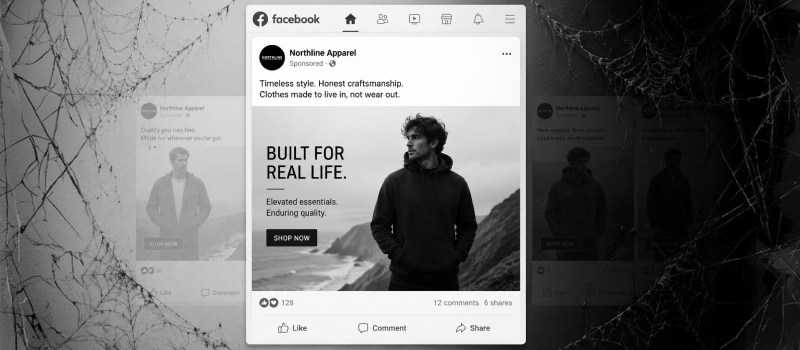
Your best ad was printing money. Then, over about ten days, it quietly stopped.
Same budget. Same audience. Same landing page. Nothing you changed.
So you did what most founders do. You blamed the algorithm. Or rising CPMs. Or "the market got tougher." You bumped the budget to force it back to life, and it got worse.
Here is what actually happened. The ad didn't break. It aged out.
The clock got a lot faster
Two years ago, a strong ad concept could run for six weeks or more before it tired out. Today that window is 2-3 weeks.
The reason is a shift in how Meta delivers ads. The Andromeda system now treats your creative, the image, the copy, the video, as its primary signal for who should see the ad.
It reads the creative itself to build the targeting. Not just your audience settings. The creative.
That sounds like a technical detail. It is actually the whole game.
Why stale creative is worse than it used to be
When an ad gets old, you'd expect it to just get less efficient. Costs creep up, returns dip. Annoying, but recoverable.
Now it's sharper than that. When your creative goes stale, the system loses its main signal for who to target. So it doesn't just slow down. It loses the thread on who your ad is even for.
That's why pumping more budget into a fatigued ad backfires. You're asking the algorithm to spend faster using a signal that's already worn out.
The ad isn't underperforming. It's done. And the system is now guessing.
It won't warn you
The cruel part is that fatigue doesn't crash. It leaks.
You'll often see the click-through rate hold steady while conversions quietly slide. The ad still looks fine on the surface. People still click. They just stop buying.
Another tell: your spend starts concentrating on a narrower and narrower slice of people. The algorithm has run out of fresh audience for that creative and is hammering the same small group.
By the time the dashboard makes the problem obvious, you've usually burned two weeks of budget chasing a corpse.
The mistake isn't your ad. It's that you only had one.
Here's the reframe.
The teams getting crushed right now are the ones still hunting for the one great ad. They find a winner, ride it, and panic when it dies. Then they spend two weeks making the next hero ad from scratch.
The teams winning are the ones whose next ad is already waiting.
They're not betting on a single piece of creative. They're running a system: a library of angles, a set of messaging frameworks, repeatable formats they can refill fast. When one ad ages out, the next is already in the queue.
That's not a creative-genius problem. It's a production problem. And production problems are solvable.
What a creative system actually looks like
It's less about talent and more about structure. A few pieces:
An angle library. Not random ideas, but a running list of distinct ways to frame the product. The pain you remove. The status you grant. The fear you settle. The before-and-after. Each angle is a fresh signal for the algorithm, even when the product is the same.
Repeatable formats. Templates for the formats that work for you, so a new ad is an afternoon, not a two-week project. Founder talking to camera. Problem-then-product. Side-by-side comparison. Customer quote on screen.
A refill cadence. You don't wait for the dip. You ship new creative on a schedule, because you now know the clock is 2-3 weeks, not six.
Once that machine exists, fatigue stops being a crisis. It becomes a thing you've already planned for.
What this costs you if you ignore it
This isn't a Meta-only story, by the way. Whether you're running ecommerce, an app, a local service, or software, the same logic applies anywhere creative drives delivery. One ad, one shelf life.
The cost of ignoring it is slow and expensive. You lose the budget spent on fatigued ads. You lose the two weeks of scramble each time a winner dies. And you lose the compounding you'd get if your account always had fresh, sharp creative in rotation.
The founders who treat creative as a one-off keep paying that tax. The ones who treat it as a system stop.
The takeaway
Your ad didn't get worse. The clock just ran out, faster than you expected, because the creative is now the targeting.
So stop trying to find the one perfect ad. Start building the engine that keeps producing good ones.
Win the production game and you win paid media. Lose it and no single ad, however brilliant, will save you.
If you've got ad spend running but no system feeding it fresh creative, that's exactly the kind of engine I help founders build at heypash.com.