At a glance:
A single skilled creative with the right AI stack can now produce what used to require a team of five.
This is not about replacing designers. It is about what a great one can now do alone.
The bottleneck has shifted from production capacity to judgment, taste, and strategy.
Clients and founders who understand this will hire and budget differently. Most don't yet.
The question is no longer "do we have enough people?" It is "do we have the right one?"
A founder I know recently shipped a full rebrand in six days. New logo, updated website, a short launch film, social assets, and a pitch deck refresh. One person. No agency. No team.
Three years ago, that would have taken a small studio four to six weeks and a five-figure invoice.
The work was good. Not "good for one person." Just good.
The math has changed
The old model was simple: more output required more people. A campaign needed a copywriter, a designer, a motion person, maybe a strategist. You hired for capacity.
That assumption is quietly becoming wrong.
AI tools have collapsed the time cost of production tasks. First drafts, asset variations, image generation, video editing assistance, copy testing - these used to each require a specialist. Now a creative generalist with the right workflow can move through all of them in a single day.
This is not about cutting corners. It is about where the time actually goes. Production used to absorb 70% of a creative's week. Ideation and judgment maybe 30%. AI has flipped that ratio for people who have learned how to work with it properly.
The new constraint is not capacity
Here is the part most founders miss.
The tools do not make decisions. They do not know what your brand should sound like, what your users are scared of, or why your last campaign missed. They do not have taste. They execute.
The person directing the tools still needs all of that. Strategy, judgment, a strong brief, and an eye for what is actually good versus what is technically complete.
This is why the shift is not "AI replaces creatives." The shift is that the premium on creative judgment has gone up. A generalist with deep taste and a working AI stack is now worth significantly more than a narrow specialist who has not adapted their workflow.
The work that used to require five people now requires one - but that one person has to be the right one.
What this means if you are hiring
A mid-level design agency with five people can now be undercut on speed and quality by a single senior creative who has built a tight AI workflow. Not always. Not for every project. But often enough that the question "should we hire an agency or find the right freelancer?" is landing differently in 2026 than it did in 2023.
What to look for in that one person:
They can show you a real AI workflow, not just mention tools by name.
They have strong opinions about what AI is bad at. If they say it can do everything, they have not tested it.
Their output is consistent across formats - copy, visual, motion, deck. The generalist range is part of the value.
They brief themselves. They do not wait to be told exactly what to make.
What this means if you are that one person
The ceiling has gone up. The expectation has too.
Clients who understand what is now possible will ask for more. And they should. If you are a creative and you are not building your AI stack, you are choosing to compete at a production speed that no longer reflects what is achievable.
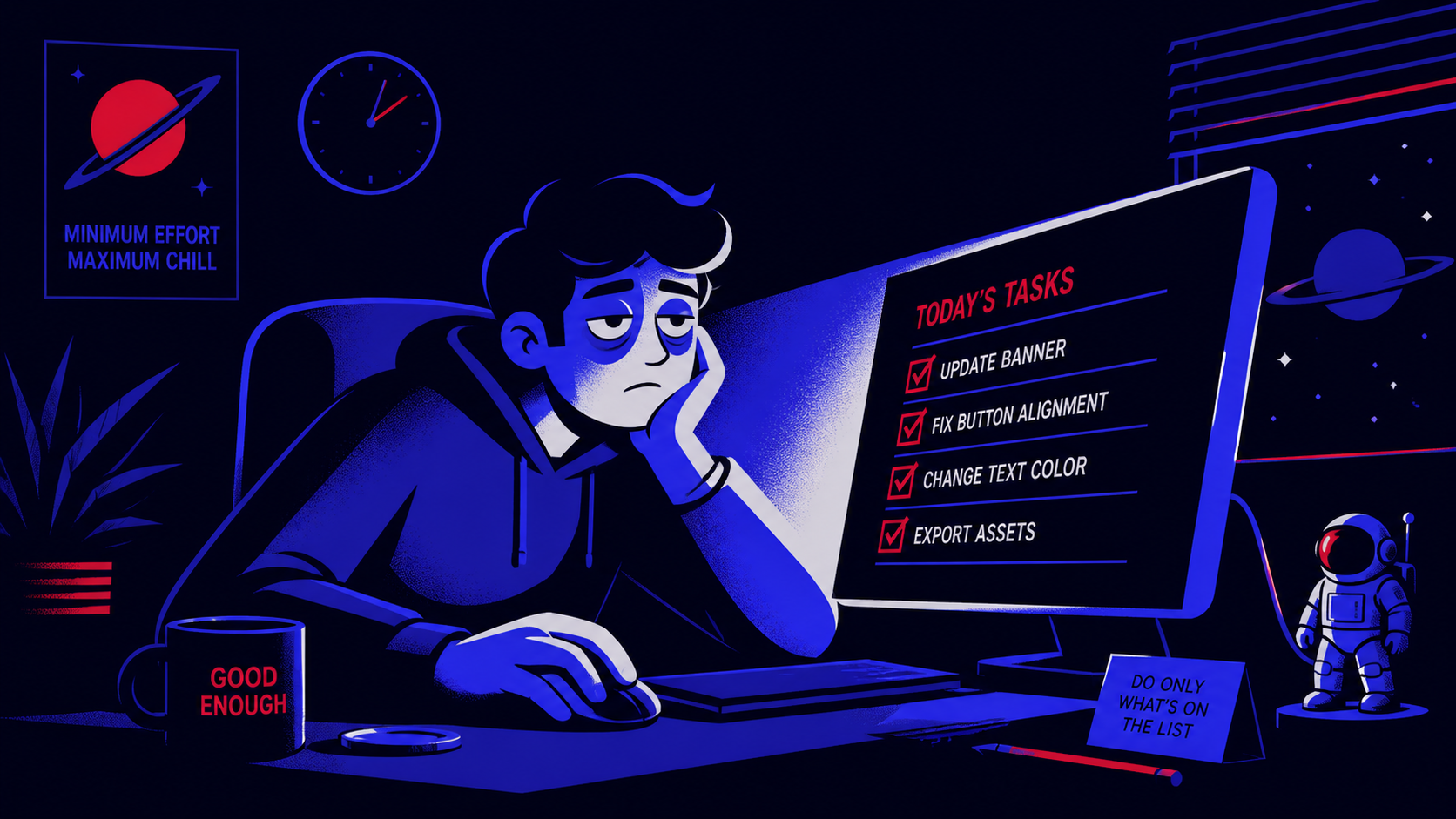
But there is a version of this that goes badly. Racing to produce more without maintaining the quality bar. Shipping volume over judgment. Using AI as a shortcut to bypass the thinking, not a tool to amplify it.
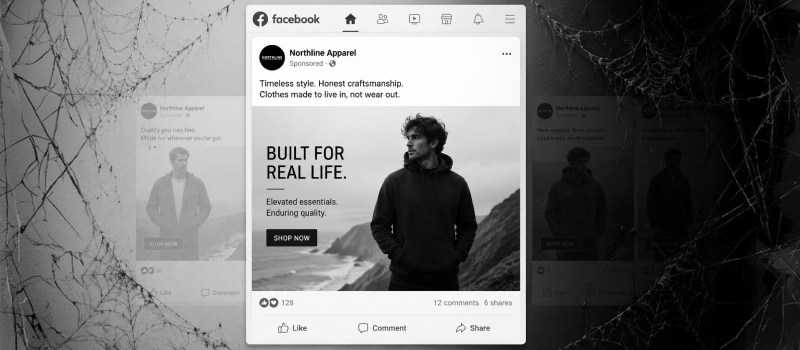
Visual consistency suffers when production speed outpaces creative control. It is one of the first places the cracks show when someone scales output without scaling taste.
The creatives winning right now are not the ones generating the most assets. They are the ones whose judgment is so good that AI just removes the friction between the idea and the finished thing.
The business case nobody talks about
There is a quiet financial argument here that most founders have not run.
If one senior creative with an AI stack can now produce what used to require a team or an agency retainer, the unit economics of creative work have changed. The cost per deliverable has dropped. The speed to market has compressed. The iteration cycle is faster.
That is not just a workflow story. It is a competitive advantage for the founders and teams who recognize it early and hire accordingly. And it is a real risk for the agencies and teams that are still pricing and staffing as if 2022 math still holds.
The gap between teams that have figured this out and those that have not is going to get wider fast.
The honest caveat
Some work still needs a team. A major brand campaign with television spots and event builds. Long-form documentary. Complex systems that need multiple specialists in parallel. There is a floor below which one person, however good, cannot go alone.
But that floor is lower than most people think. And it gets lower every six months.
The question is not whether AI-powered solo creative work is real. It is. The question is whether you are building your operation around the old math or the new one.
If you are figuring out how to build or find that kind of creative capacity, heypash.com is a good place to start.